Near the end of 2019, a legendary lighting designer, Ingo Maurer, passed away. He left behind a huge body of inspiring work, and today I’m sharing a few of his ideas.
Ingo Maurer / Image courtesy DesignerBox.com
Ingo Maurer’s passion for light began in the mid 1960s, birthed from some of his earliest memories of fishing with his father, seeing the reflection of light dance with the water. Over 50 years, Maurer developed an outstanding career, with exhibitions in museums all over the world, commissions from international clients and brands, and a firm employing nearly 80 people.
Maurer’s work displays a love for light, the films and artists that inspired him, and a commitment to not making compromises. There is no one who creates lights as unique as Ingo Maurer.
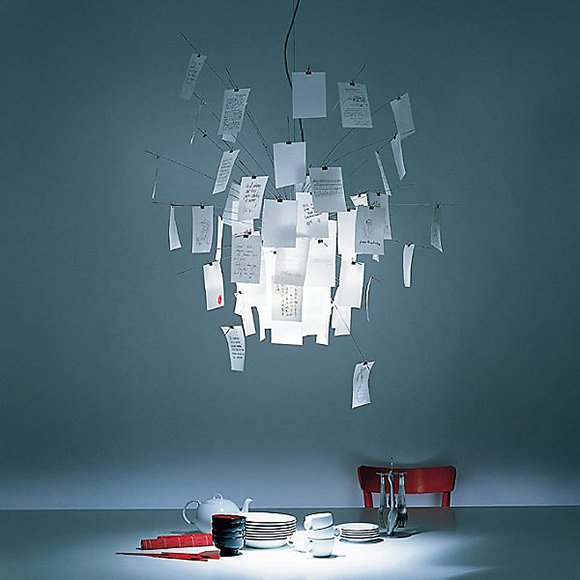
Zettelz 6 Suspension Lightfrom Ingo Maurer is meant to have the owner participate in its final look. Japanese paper sheets suspended from stainless steel rods are inserted into the central housing. The placement of the rods is up to the user, resulting in each piece being totally unique. Printed and blank paper sheets are included, for personalization.
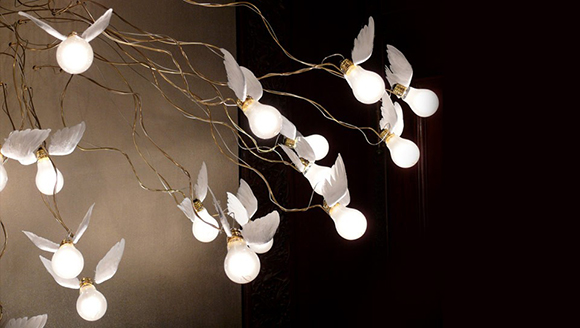
Birdie by Ingo Maurer / Image courtesy Mohd.com
Birdie by Ingo Maurer is created by wings in real goose feather-wrapped bulbs. The line includes table lamps, pendants, wall lights; all free to fly in the imagination of design. LED technology combines with creativity, and the result is a beautiful winged collection.
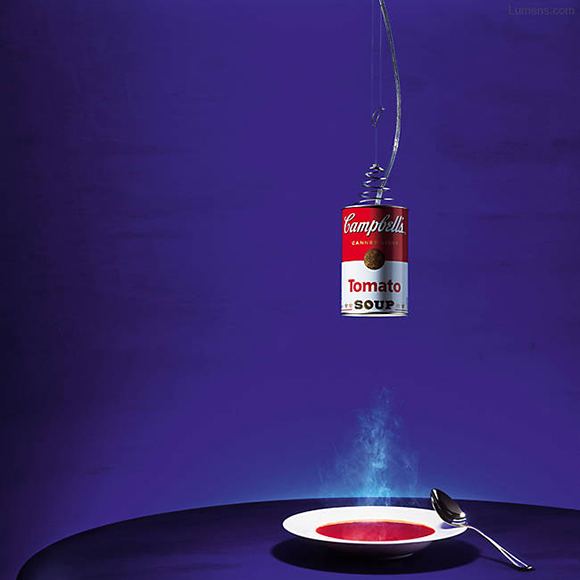
Ingo Maurer Canned Light by Christoph Matthias & Hagen Sczech / Image courtesy Lumens.com
The Ingo Maurer Canned Light puts a different spin on Andy Warhol-inspired pop art; it actually appears to “pop” from the wall or ceiling from its spring-like top. This contemporary design by Christoph Matthias and Hagen Sczech for Ingo Maurer will likely be around as long as Warhol’s original.
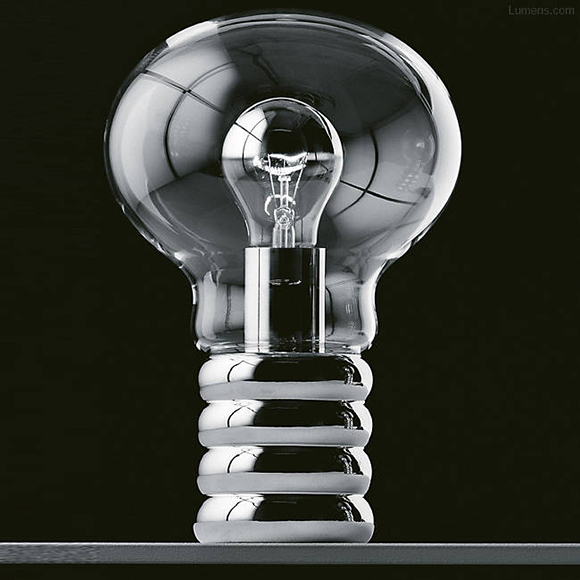
Ingo Maurer’s first-ever lamp design, conceived in 1966. The Ingo Maurer Bulb Table Lamp shows just how far back Maurer’s appreciation of the form and function of the incandescent bulb goes. The bulb-inside-a-bulb design — of a hand-blown crystal glass shade and polished chromium base — is matched inside by a top-chromated incandescent bulb.
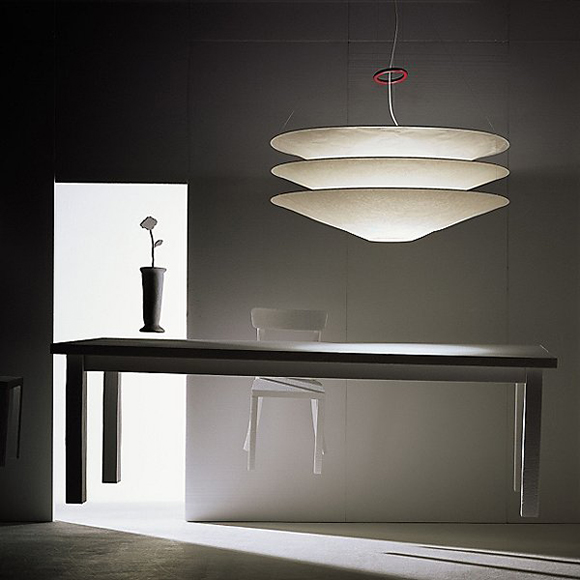
Floatation Suspension Light by Ingo Maurer / Image courtesy YLighting.com
Floatation is a suspension light made from Japanese paper shades for ambient illumination. Three handmade shades are suspended by thin metal cables, while a red iron ring provides a pop of color. The paper shades of Floatation are crinkled, an intended design attribute, casting soft light over a dining table or living space.
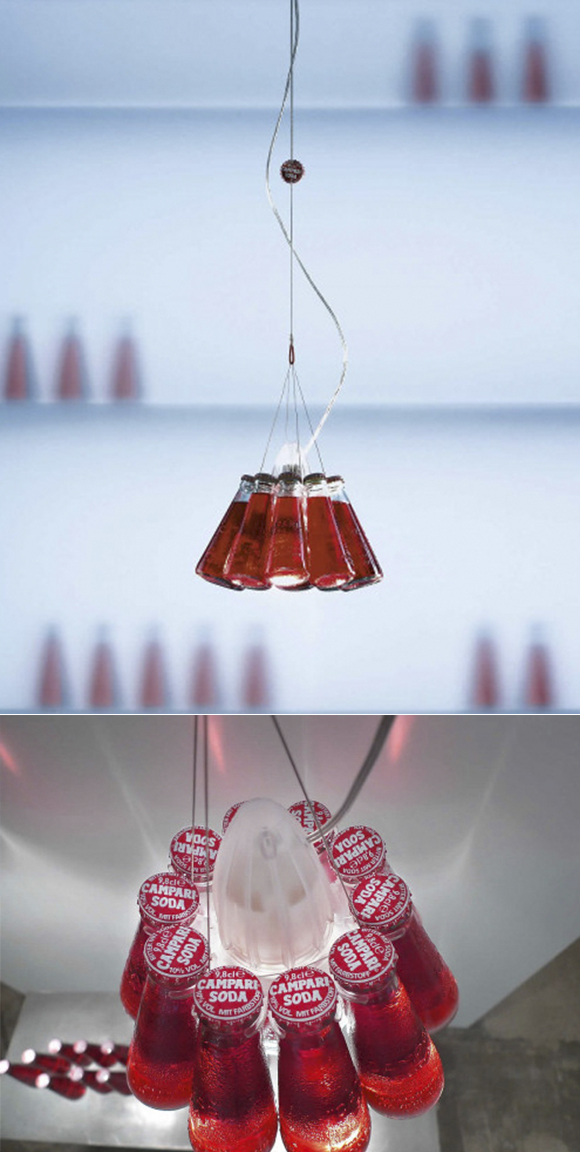
Campari Light by Ingo Maurer / Image courtesy 1001lights.com
The Ingo Maurer Campari Light shows how innovative and creative luminaires can be. Ten original Campari soda bottles, still filled with the classic soda, are combined into one extraordinary ensemble, wrapping the room in a fascinating red. Down the center of the bottles, a transparent plastic body holds the light fixture, under a transparent canopy. All the bottles are removable, and the luminaire is height-adjustable with a Campari crown cap at the top. What a marvelous way to look at light!
Do you want to feature stunning lighting design in YOUR home? Contact Kimball Starr today for a consultation. She designs beautiful homes in the San Francisco Bay Area and Nevada.
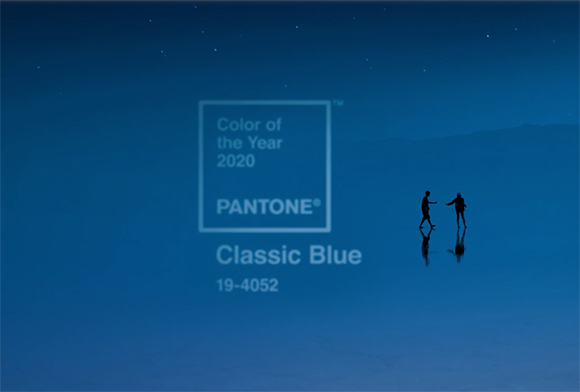
Pantone recently announced their annual Color of the Year – Classic Blue.
Image courtesy Pantone.com
From their website, “Instilling calm, confidence, and connection, this enduring blue hue highlights our desire for a dependable and stable foundation on which to build as we cross the threshold into a new era.”
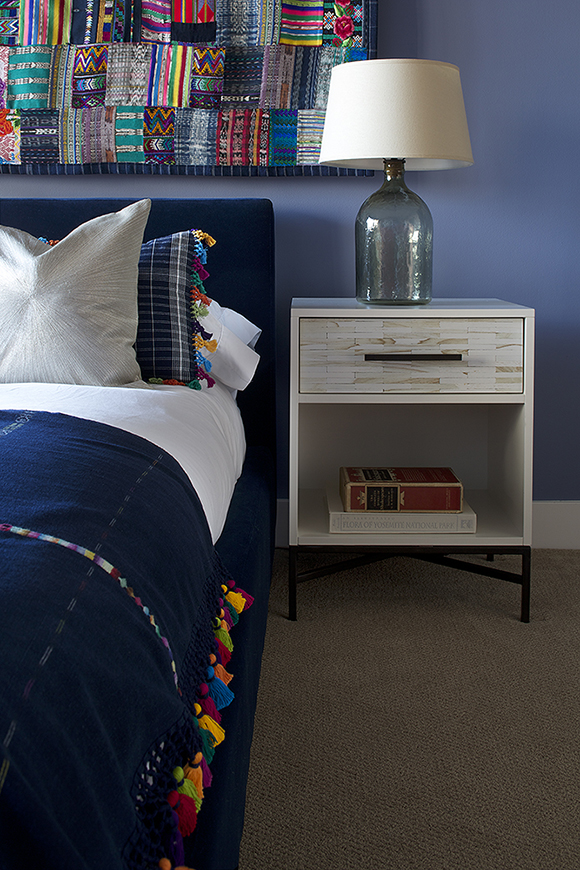
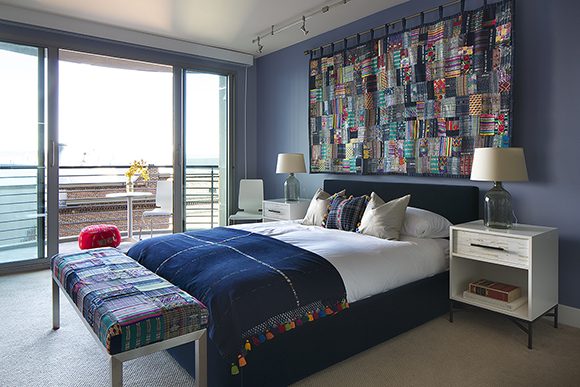
Because Classic Blue is, well, classic, I’ve worked with this dependable color multiple times. One of my favorite projects was for a retired couple in San Francisco who wanted to bring the colors of their favorite travel destination of Guatemala into their home.
Design by Kimball Starr / Photo by Eric Rorer
In the master bedroom, we used the client’s own material to create a statement piece above the bed. The headboard, bed and footboard is upholstered in Classic Blue velvet. The bed is draped in a custom-sewn blanket of Classic Blue with brightly-colored tassels, while atop the nightstands sit beautiful glass lamps. At the foot of the bed is a bench, also custom-upholstered in the client’s own material from Guatemala.
Design by Kimball Starr / Photo by Eric Rorer
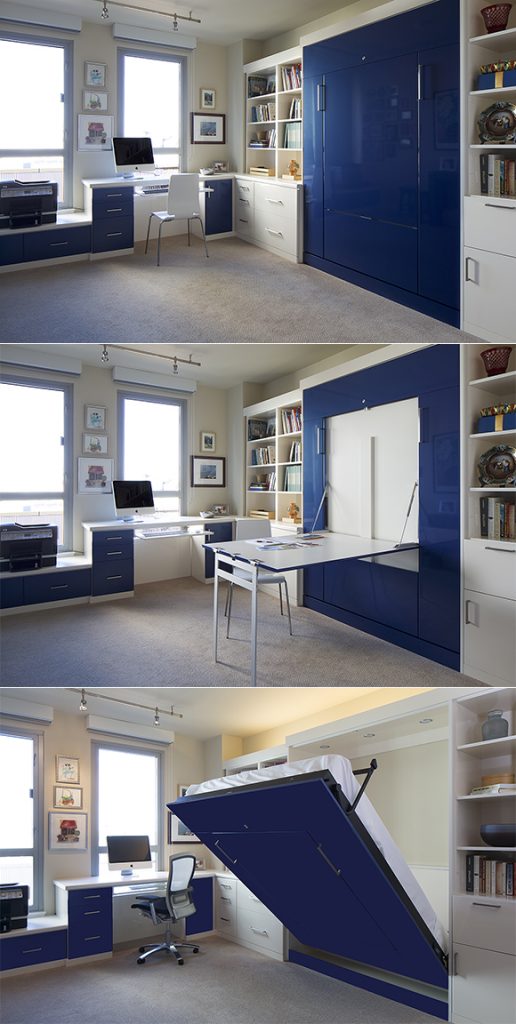
In the guest bedroom, extensive custom cabinetry in Classic Blue allows for dual use as a home office. The wall bed cabinetry color is echoed by Classic Blue filing and storage drawers.
Design by Kimball Starr / Photos by Eric Rorer
I look forward to seeing all the ways Classic Blue will appear in 2020 interiors!
If you have a project you want to incorporate Pantone’s color of this year or any year, Kimball Starr can guide your color journey! Contact her today for a consultation.
The end of the year is a great time to look back at our predictions, and see how accurate we were in forecasting the year. I predicted I would work with amazing clients, who would challenge me to deliver just the right style for them in 2019, and I was right!
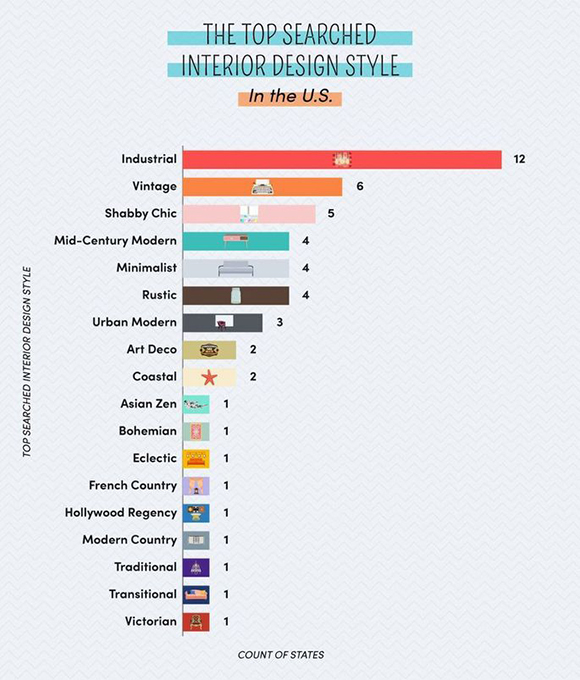
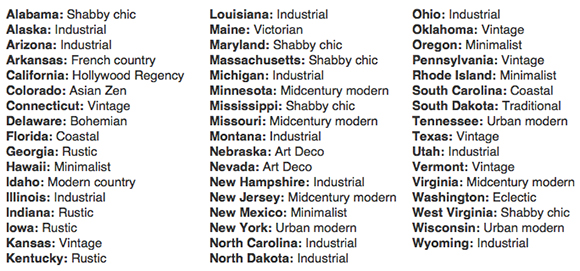
A look at what interior design styles were popular this past year takes us all around the country, with the overall most popular style searched for online being Industrial, according to Realtor.com.
Image courtesy Realtor.com
Below are the top design styles by state. California’s is Hollywood Regency, which is no surprise. I’ve created spaces for people to feel like stars in their California homes for over 16 years.
Image courtesy Realtor.comList courtesy Realtor.comDesign by Kimball Starr / photo by Eric Rorer
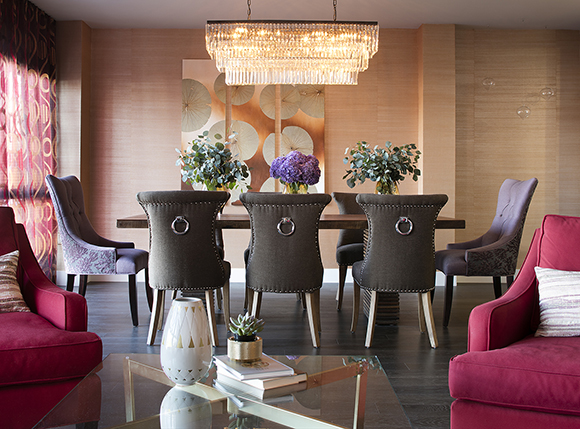
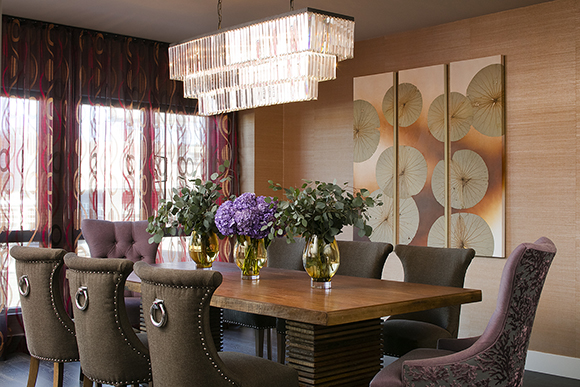
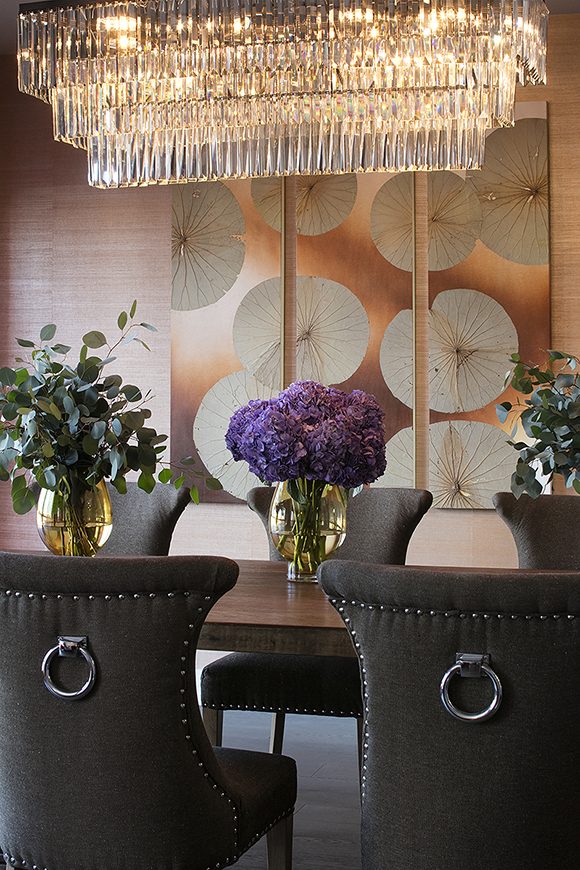
Glam is a similar style to Hollywood Regency. To show what I mean, in the photo above, my client wanted her Oakland home to feel welcoming to both men and women. So I brought in glamorous feminine elements, juxtaposed with heavy, masculine woods and tones. In her now-elegant dining space, the clean lines display an element of luxury while the glass chandelier and detailed head chair backs provide the glam.
Design by Kimball Starr / Photo by Eric Rorer
The heavy wood dining table is balanced out with additional shine — the copper triptych artwork. She can come home from a long day at the office. and still throw a glamorous late-night dinner party with very little effort in a dining room like this, adding a little texture and sparkle to the evening under a fabulous chandelier.
Do YOU want help bringing glam into your life? Kimball Starr designs homes for stars just like you in the Northern California and Nevada areas. Contact her today for a consultation!
The holiday season brings chances to gather and be festive together, with family, friends, and guests arriving to join in the fun. Here are some of my best host tips to create a welcoming guest space for a memorable experience in your home.
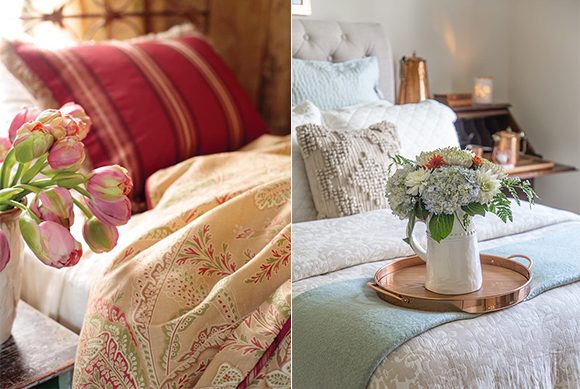
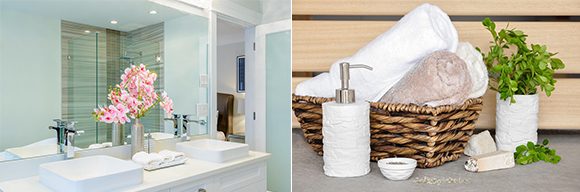
Tip 1: Fresh Flowers
Left photo courtesy HGTV.com / Right photo courtesy DesignEnthusiast.com
Nothing says clean and fresh like clean sheets and linens, and freshly-cut flowers. Place a seasonal arrangement next to the bed, or pick some from your own garden, for a personal touch.
Tip 2: Hand-Rolled Towels
Both imagescourtesy SobelAtHome.com
One of the preparations that makes a spa or hotel feel luxurious is the special way they roll their towels and washcloths by hand. Take it a step further by placing towels in a basket or neatly stacked on a tray on the counter.
Tip 3: Lotions & Beauty Products
Left image courtesy Bulgari / Right image courtesy Sheraton Le Grand Bain
How many times have you forgotten your face cream, soap, shampoo, conditioner or hand lotion on a trip? A hotel or spa will provide you with a matched set: Classy, luxurious, and sweet-smelling. You can do the same thing for your guests, but go a step further – find out what brand they prefer, and have theirs available. They’ll be very impressed at your thoughtfulness.
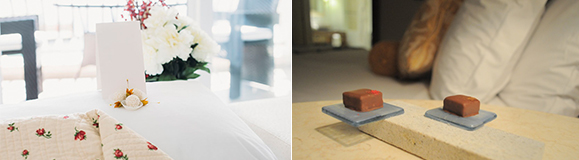
Tip 4: Turndown Bedding & Chocolates
Left image courtesy Chase.com / Right image courtesy Glass Studio St. Regis
Who can resist snuggling into bed when the sheets and covers are turned down for you, with a chocolate on the pillow? Not me! Guests will feel like they’re receiving the white glove treatment if you provide this simple service.
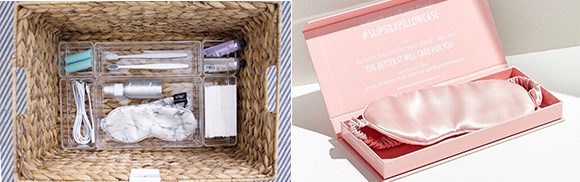
Tip 5: Sleep Kit
Left image courtesy TheHomeEdit.com / Right image courtesy SlipSilkPillowcase.com
A good night’s rest is probably the most important thing you can provide for your guests who’ve traveled to reach your home. A thoughtful way to provide that is to install blackout blinds in your guest bedroom, but if you don’t have those, the next-best option is a sleeping mask, and earplugs. Take it up a notch by also providing spare chargers for phones and cameras, extra toothbrushes, slippers, and a light aromatherapy spray for their pillow.
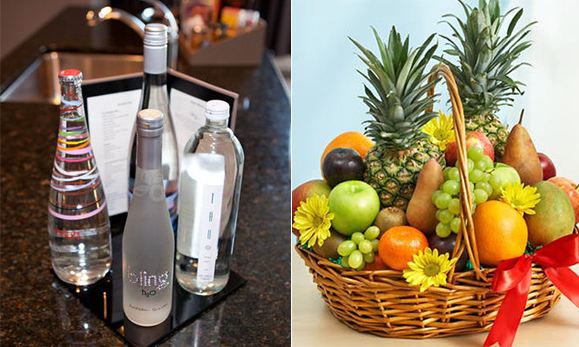
Tip 6: Drinks & Snacks
Left image courtesy Oyster.com / Right image courtesy CentralSquareFlorist.com
Imagine you want a midnight snack while everyone else is asleep. You tiptoe to the kitchen, open the fridge door, and see your favorite treat or drink waiting for you! You probably feel happy, plus relieved because you don’t have to wake your hostess. This is the ultimate in hosting, anticipating every desire and need of your guests. They will not only thank you, they’ll remember how you made them feel – like a million bucks.
If you want assistance creating the ultimate luxury guest bedroom in your home, or even for yourself, contact Kimball Starr today! She looks after the details that make superlative experiences.
The holiday season is almost here! To help with your hosting duties, I’m sharing some ideas on how to maximize the useable space in a petite home.
Cooking While Entertaining
Design by Kimball Starr / Photo by Eric Rorer
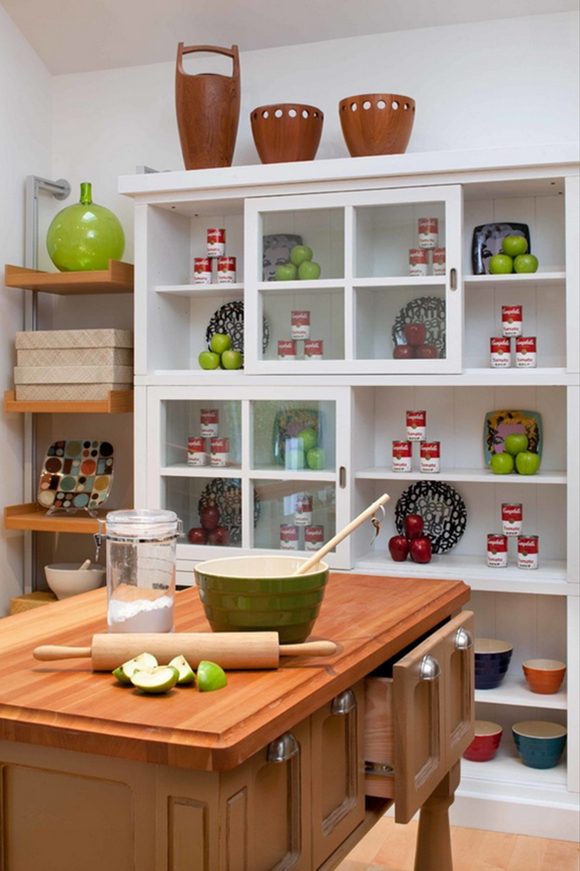
In the photo above, the custom island appears in the foreground, clad in butcher-block for the perfect chopping surface. A pullout work surface provides additional drinks space for guests, while you cook and entertain.
Deep drawers are great for multi-use storage. A mix of open and closed shelving is ideal for displaying your china, and keeping kitchen items close at hand. Place infrequently-used pieces that are also beautiful at the top of your cabinetry, for a good way to utilize the top surface.
Design by Kimball Starr / Photo by Eric Rorer
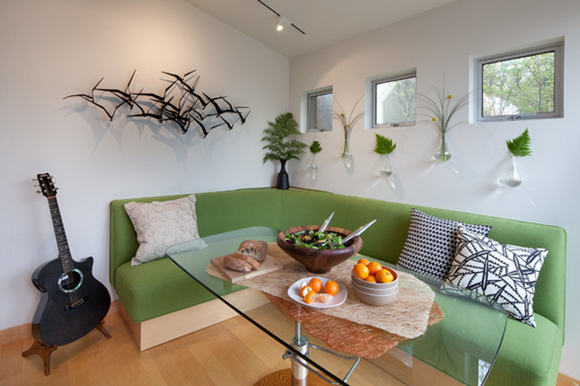
In the dining area, a corner banquette lets you pack a lot of people in a small space. An adjustable-height coffee table is perfect for pre-dinner cocktails. Raise the table when you’re ready for dinner.
Entertaining in a Petite Living Room
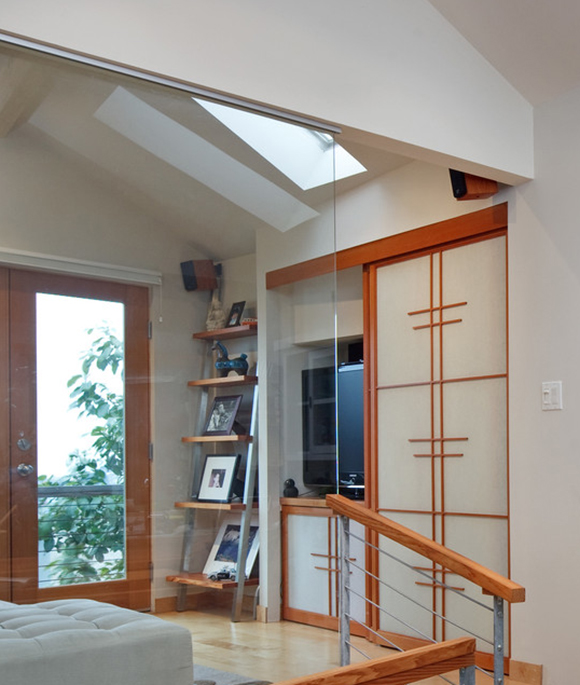
The living room is the primary living space where we relax, spend downtime after a hard day’s work, and have fun with friends and family. If you have tight space restrictions, reducing clutter through clever storage will maximize your living and entertaining area, as in the sliding shoji screens below.
Design by Kimball Starr / Photo by Eric Rorer
Here, the glass partition between rooms functions as the balustrade for the stairwell. Instead of installing a sheet-rocked wall, the glass partition takes up less depth, provides safety, and allows the eye to travel freely.
Design by Kimball Starr / Photo by Eric Rorer
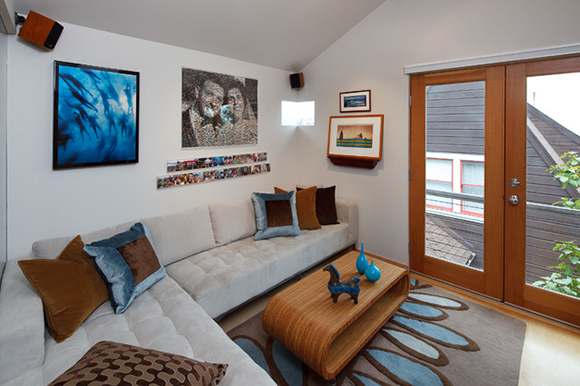
An L-shaped sectional sofa fits perfectly from wall to wall, to maximize comfortable seating. Keep the upholstery color similar to the wall color, so the room is visually open. The heavy coffee table does triple duty here — functioning as a table, providing storage underneath for remote controls and game consoles, and also serving as additional seating when more guests arrive.
If you need ideas for a space to entertain, interior designer Kimball Starr provides design for all sizes of homes throughout the San Francisco, San Jose, and Marin areas. Contact her today for a consultation!
Are you the type of person who loves books, and has a home library? Do you struggle with space and making it all look good? Or maybe you have a collection you want to display. I’ve got some ideas for you! Today I’m showing off a few of the designs for shelving I created for my clients.
Shelf Form & Function
Design by Kimball Starr / Photo by Joe Fletcher
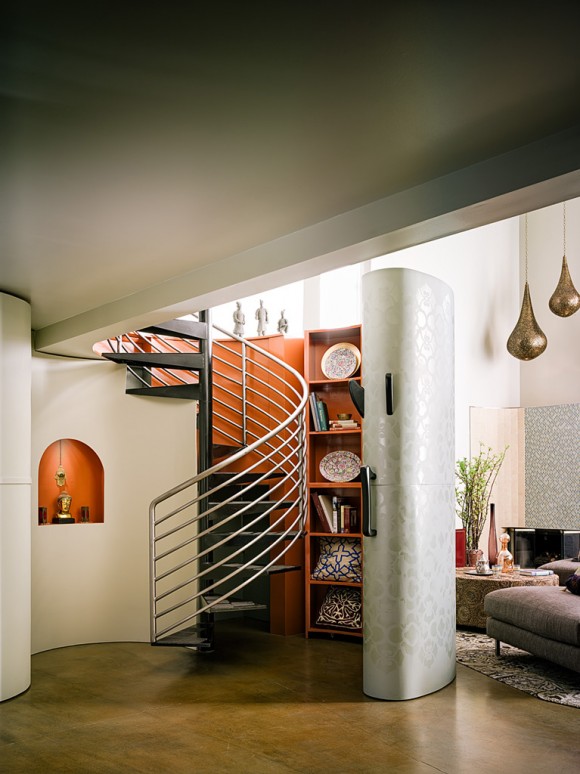
This creative space solution for a San Francisco loft has a movable set of shelves that wrap around and hide the circular staircase, pulled open and shut with a large black handle. A change in color for the modern staircase rails and a new high-gloss shelving interior, the addition of global textures and patterns, and coordination with a pop of color in the nearby wall niche makes this shelving really special. I dressed it with display plates and pillows, to supplement the owner’s books.
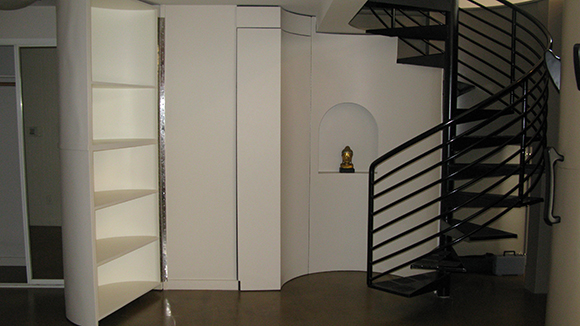
Before
There’s a second moveable shelving unit, which you can see in this before photo. Wouldn’t you just love to surprise your guests by sliding open a hidden bookshelf like this?
Media & Cocktail Combo
Design by Kimball Starr / Photo by Eric Rorer
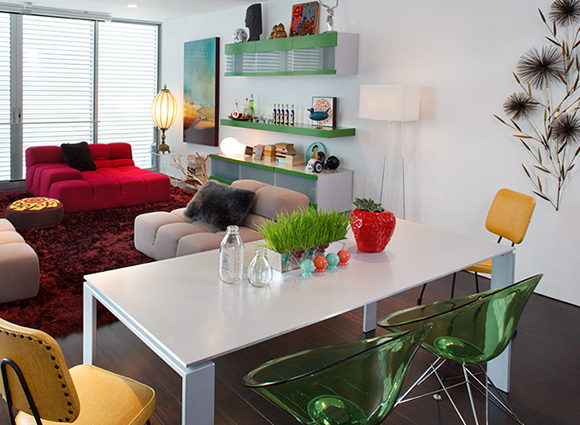
This San Francisco bachelor’s open-plan living and dining room conceals a floor-to-ceiling projection screen for movie watching, surfing the web, and playing video games. I wanted to display some of the owner’s fun collectibles, and hide the tech.
Design by Kimball Starr / Photo by Eric Rorer
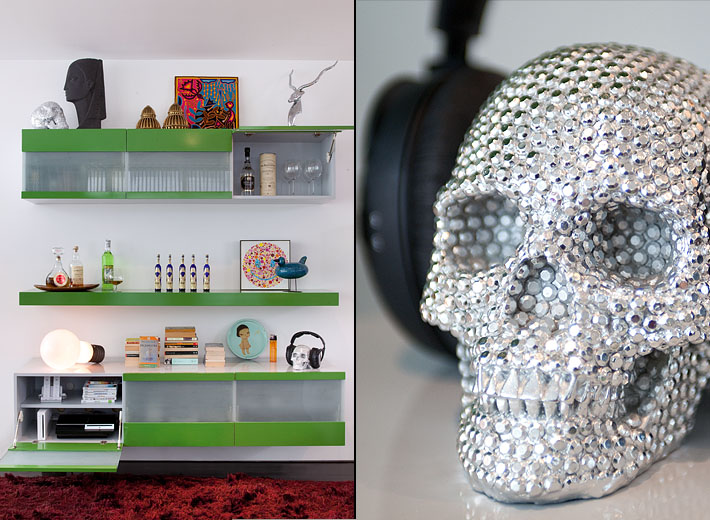
The solution: A custom wall-mounted media cabinet stores AV equipment wired into the ceiling projector, and also serves as a bar area. Collectibles, media and cocktails live comfortably side-by-side on this shelving, and look very hip together.
Home Office Guestroom
Design by Kimball Starr / Photo by Eric Rorer
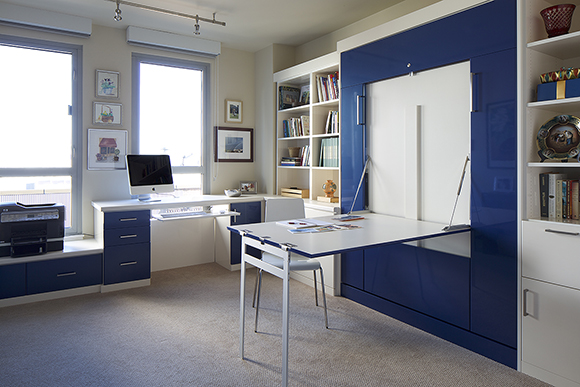
A hardworking home office doubles as a guest bedroom in this condo. The convertible wall bed is hidden behind the large blue cabinetry, with a second, custom drop-down desk in white. The owners, who were recently married and moved in together in their golden years, wanted to combine their belongings, downsize, and still have room for family and overnight guests. Shelves either side of the bed unit are filled with books and display items.
Design by Kimball Starr / Photo by Eric Rorer
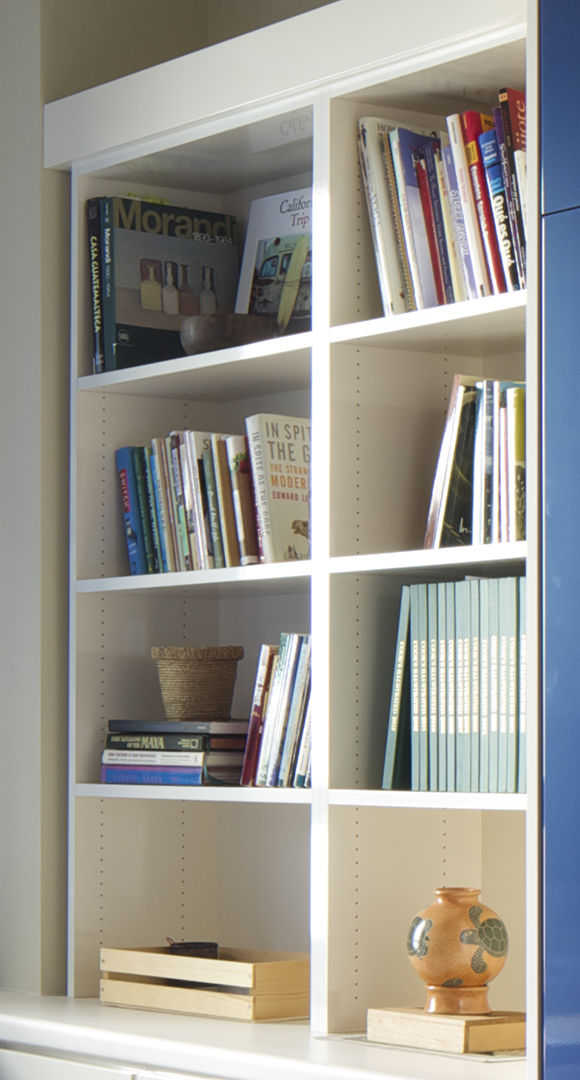
Upon closer inspection, you can see I’ve turned one of the books around to face into the room, so the cover art is visible, and used a designer trick of stacking books with spines out, adding to it by topping the stack with a beautiful vase or sculpture. For additional interest when it comes to a collection on multiple shelves, I stagger the direction books are leaning.
Custom Cabinetry & Open Shelving
Design by Kimball Starr / Photo by Eric Rorer
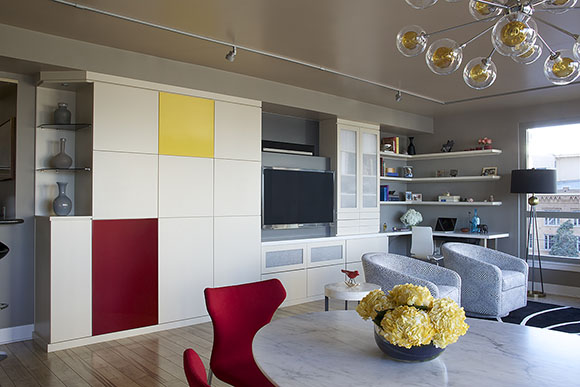
Here I’ve created a custom wall cabinet to hide our downsizing couple’s many reference books and filing. In the corner are open shelves and a small, lightweight but sturdy desk, appropriate for paying bills and handling mail, or working on a laptop computer.
Design by Kimball Starr / Photo by Eric Rorer
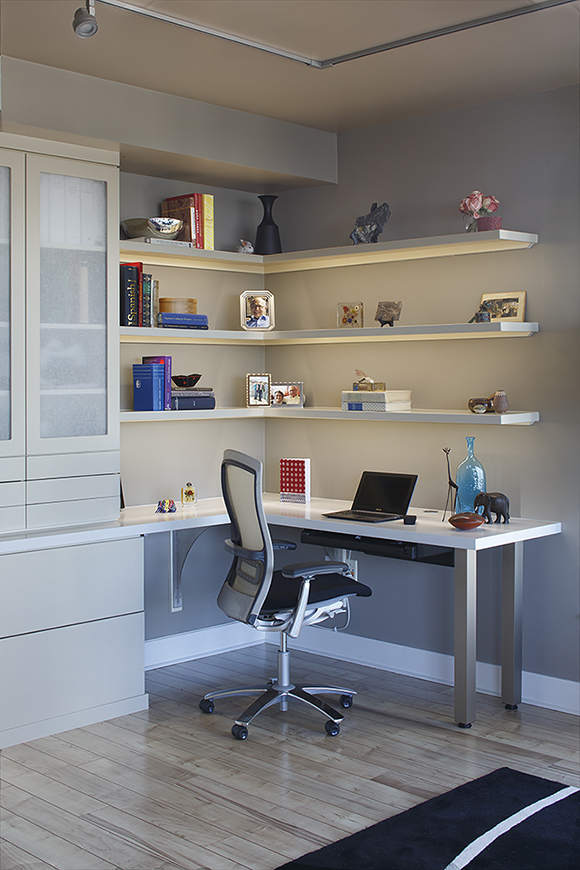
When we look more closely at the desk and shelving, you see only a few books visible on the open shelves, mainly small reference books such as a dictionary. The rest of the items are beautiful collectibles and personal memorabilia, family photos, sculptural pieces like vases, and fresh flowers. Working at a desk that’s uncluttered, surrounded by things you love, makes life feels lighter and easier.
If you want help organizing your books and collections into a beautiful surrounding, get in touch with designer Kimball Starr! She beautifies homes all around the San Francisco Bay Area, Northern California and Nevada.