Craftsman style is popular in California (as well as many other states) due to its clean lines, balance, and harmony with nature. Let’s take a look at two of the Craftsman projects I’ve been fortunate to design for my clients.
Design by Kimball Starr / Photo by David Duncan Livingston
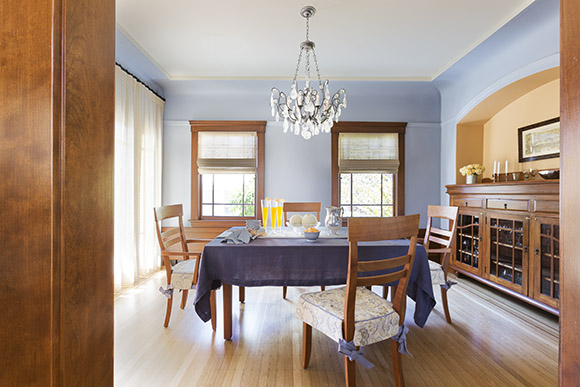
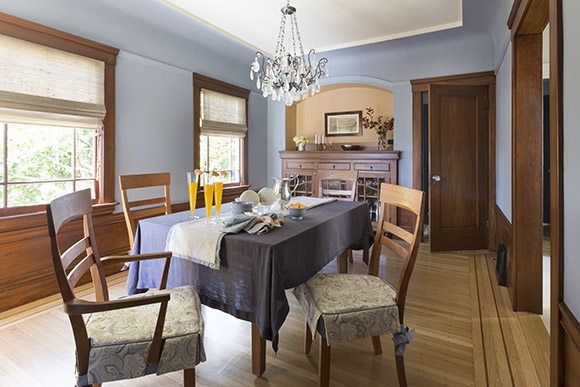
If you are drawn to natural elements with some history, a traditional dining room is a good style choice for you, and matches well with the Craftsman aesthetic.
Design by Kimball Starr / Photo by David Duncan Livingston
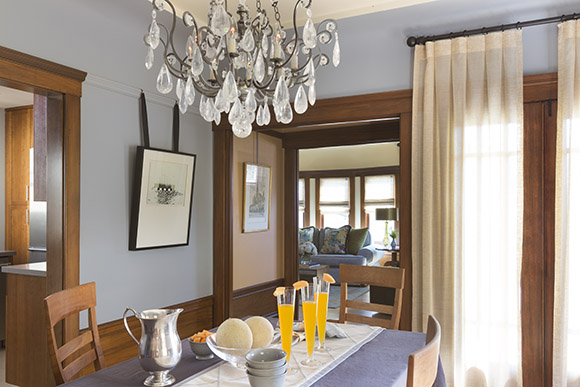
The beauty of the natural wood and the craftsmanship really come through in a traditional dining space like this one. Going without a rug is in keeping with the style, and makes it easy to clean up after your meal.
Design by Kimball Starr / Photo by David Duncan Livingston
Splurging on something like a Schonbeck chandelier made from gorgeous rock crystals continues the natural elements and complements the woodwork. This dining room would be perfect for someone who appreciates the classics.
AFTER – Design by Kimball Starr / Photo by Marija Vidal
In this next project, we transformed a living room with fireplace. I’m pleased to show before and after photos so you can see the process.
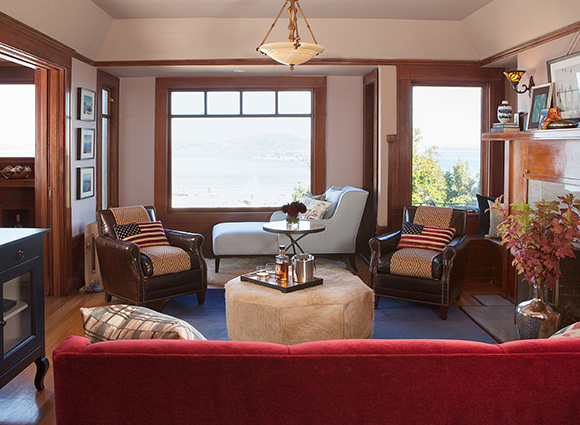
My client’s San Francisco Bay Area condo has good bones, with strong Craftsman lines and gorgeous built-ins. We wanted to highlight those, creating a masculine, comfortable, modern classic living room.
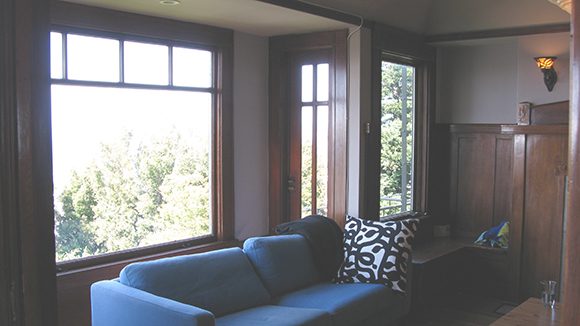
BEFORE – Photo by Kimball StarrAFTER – Design by Kimball Starr / Photo by Marija Vidal
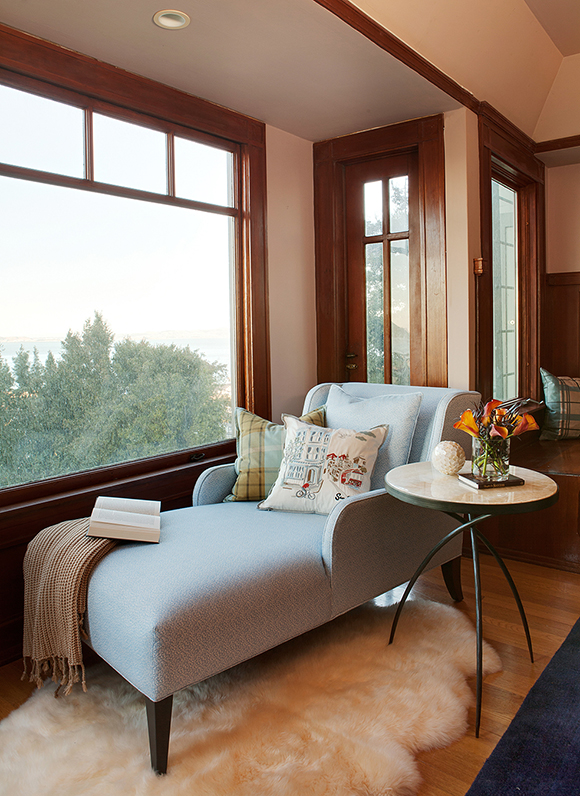
To increase circulation space and take advantage of the natural light streaming through those beautiful Craftsman wood frame windows, I replaced the bright blue sofa with a sky-blue custom-made chaise lounge, and a sheepskin rug. Now it’s the perfect corner for a cup of coffee with a book, or just to daydream.
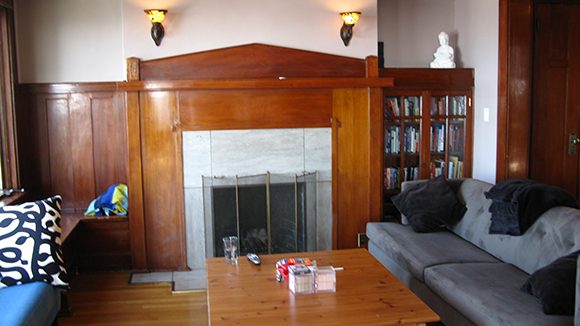
BEFORE – Photo by Kimball StarrAFTER – Design by Kimball Starr / Photo by Marija Vidal
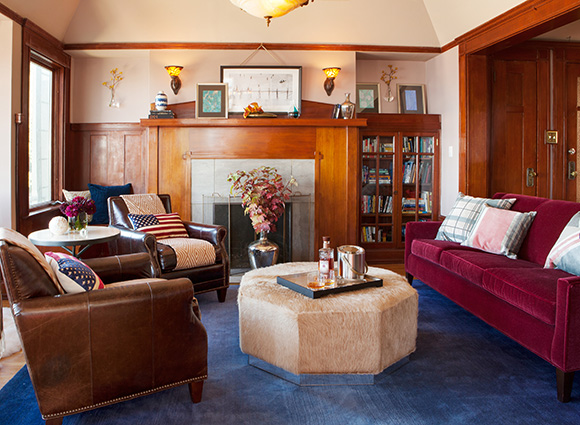
I used a mix of primary colors with neutrals to create interest and bring out warm tones in the wood, especially the fireplace. An oversized octagonal animal-hide footstool doubles as a surface for a tray of drinks. The deep blue rug is cozy underfoot, while a pair of leather club chairs makes room circulation a breeze, across from a red velvet sofa to enjoy the view.
Now it’s both classy and comfortable when our gentleman wants to welcome guests, or just enjoy the space on his own.
To transform your home into your dream destination, Kimball Starr can help! Contact her today for an in-person or remote meeting.
Have you ever gone to a design center? It’s a large building or group of buildings where you can find furniture and fabric showrooms for the interior design industry. Most metropolitan cities have one.
You should visit a design center for your next renovation or home design project, WITH your interior designer. (And if you don’t have a designer yet, I’d be happy to help.) Here’s why.
Access
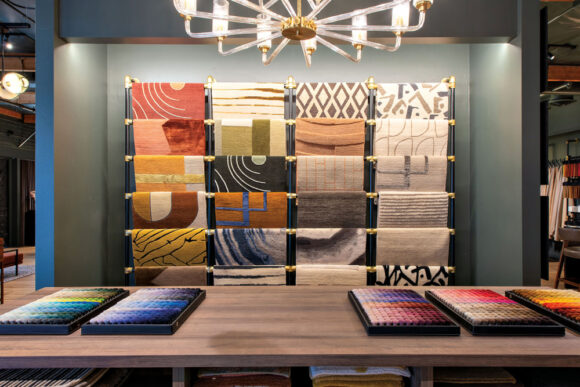
Photo courtesy San Francisco Design Center
Some design centers are only open to interior designers with registered businesses, including a resale tax permit. This means that the general public can’t enter without an interior designer. Other design centers are dual access for both professional designers and the general public.
Pricing
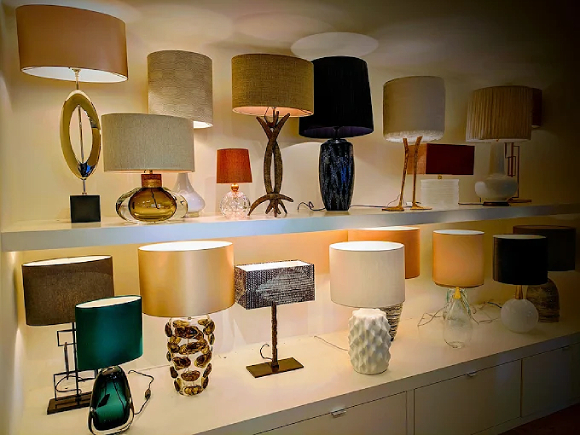
Photo courtesy Luxe Interiors
Dual access design centers will protect the designer’s markup by obscuring the pricing with codes. This means you won’t be able to know what the price of something is at first glance. You’ll need your designer to interpret for you!
Some designers will charge a flat fee for shopping on your behalf, and pass along any discounts they receive. Others will charge a percentage of the total cost, and retain the markup difference. There are other combinations and pricing methods as well.
There’s no wrong way to handle pricing, just make sure you understand what YOUR designer will do, so there’s no misunderstandings.
Lead Times
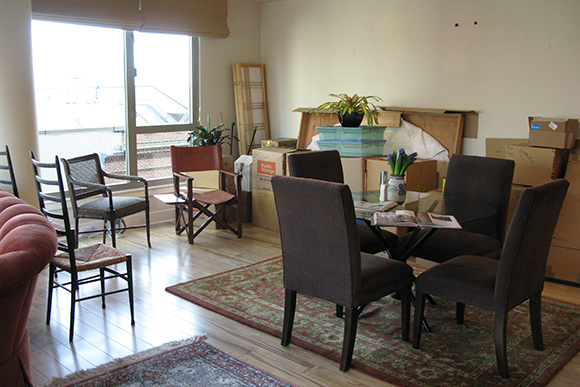
Photo courtesy Cindy Tsai
The prevalence of online and onsite furniture companies that stock their items in a nearby or attached warehouse has reduced the public’s expectation of the amount of lead time required.
It’s important to know that when you’re placing an order for custom furniture, the time from when you place the order to when you receive the order can be quite lengthy, from multiple months to a year or more. This depends on where the company is located, where they source their materials, whether you’re using stock fabric or COM (customer’s own material), and how they ship and deliver.
You’ll want your designer to confirm what the expected lead times are when researching and especially when placing orders. Knowing what order in which to receive items is also key. You won’t want furniture to arrive before the new flooring!
Terminology
Photo courtesy Michael Wu, Ph.D.
COMs, COLs, memos, and FF&E are terminology designers use on an everyday basis. COM is the customer’s own material, meaning the customer or designer selects and provides a fabric not offered with the item you’re purchasing. COL is customer’s own leather, a memo is a fabric sample, and FF&E is furniture, fixtures, and equipment.
As a designer, I have years of experience not only with terminology, but also reading and drawing plans and elevations. We don’t call them blueprints anymore because they’re not printed on blue repro paper!
Plans can be delivered electronically, and even include a video component in some cases. I draw floor plans, get your approval, and communicate with the contractors directly, so everything will be installed correctly and you can enjoy your new space stress-free.
If you have questions about the design process, how to shop at a design center, or terminology that’s confounding you, get in touch! I’m happy to help.
Kimball Starr designs beautiful homes throughout the San Francisco Bay Area and Lake Tahoe. Contact her today for a remote or in-person consultation.
Are you a wine lover? Do you want to have a beautiful place to store and enjoy wine at home or at the office? Here’s one way we delivered that for my San Francisco clients, with a before-and-after illustration.
BEFORE: Photo by Kimball Starr
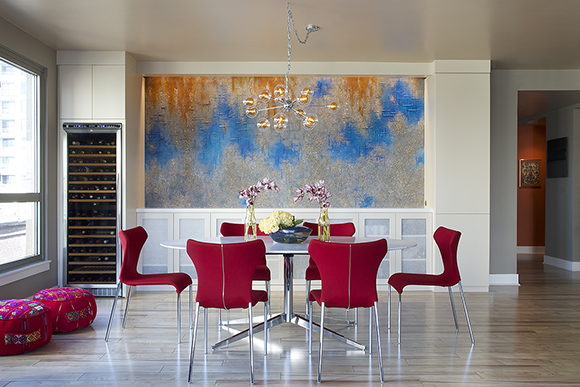
We created a wine storage solution in a San Francisco condo’s open plan dining area. The owners wanted something contemporary and sleek, while still welcoming and convenient.
AFTER: Design by Kimball Starr / Photo by Eric Rorer
We sunk the wine storage into the wall for a clean look, with slide-out racks. Beside it, a built-in credenza makes it easy to serve a flight of wines for tasting, with hors d’oeuvres. We added a second column on the right to balance the wall space and contain the credenza.
The modern dining chairs and pedestal table are the perfect spot to sip or pair wine with a meal, beneath a gorgeous glass chandelier.
On the wall, a custom hand-painted mural ties in colors from their beloved vacation destination of Guatemala, so our retired couple can enjoy a glass of wine and share happy memories for many years to come.
Kimball Starr Interior Design creates wine storage in homes throughout the San Francisco Bay Area and Lake Tahoe, and she can for you, too. Contact her today for a consultation by phone, video chat or in person!
If you like plants and living things, like I do, then you’ll love this fun way to bring more plants into your interiors, creating an indoor-outdoor look – with green walls!
Design by Kimball Starr / Photo by Eric Rorer
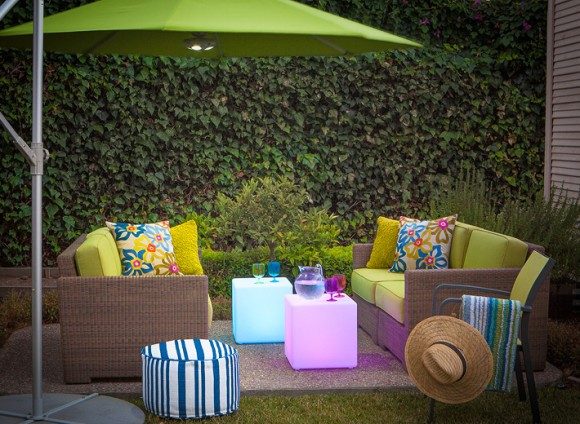
My San Francisco client wanted a beautiful backdrop to their small patio space, so we highlighted the green living wall with bright fade-resistant pillows on outdoor seating, a lime-green umbrella with a built-in light, and these funky LED cubes used as tables.
Photo courtesy Green Urban Life Gmbh
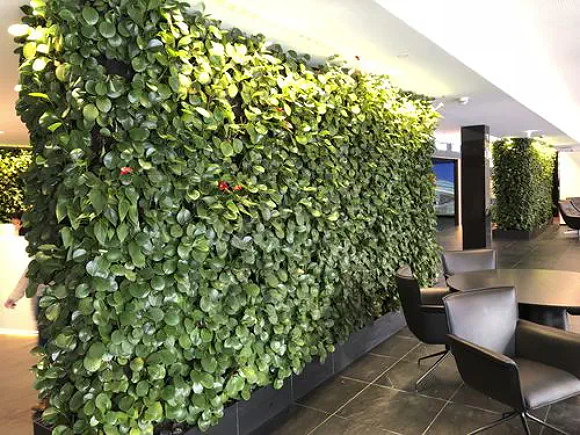
You can liven up a hallway with a green wall in a variety of plantings.
Photo courtesy Green Urban Life GmbH
Use a green wall as a room divider or separator. It cuts down on noise and dust, creating cleaner air.
Photo courtesy Green Urban Life GmbH
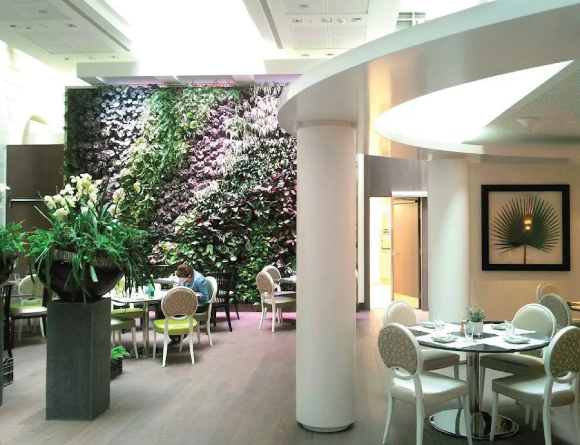
This green wall at the back of a room will draw people further into the space, great for a restaurant or bar.
Design by Kimball Starr / Photo by Eric Rorer
Get creative by creating a hanging display of living greens, as we did here in my client’s city condo. The possibilities are endless.
Kimball Starr designs beautiful homes throughout the San Francisco Bay Area and Lake Tahoe. Contact her today for a remote or in-person consultation.
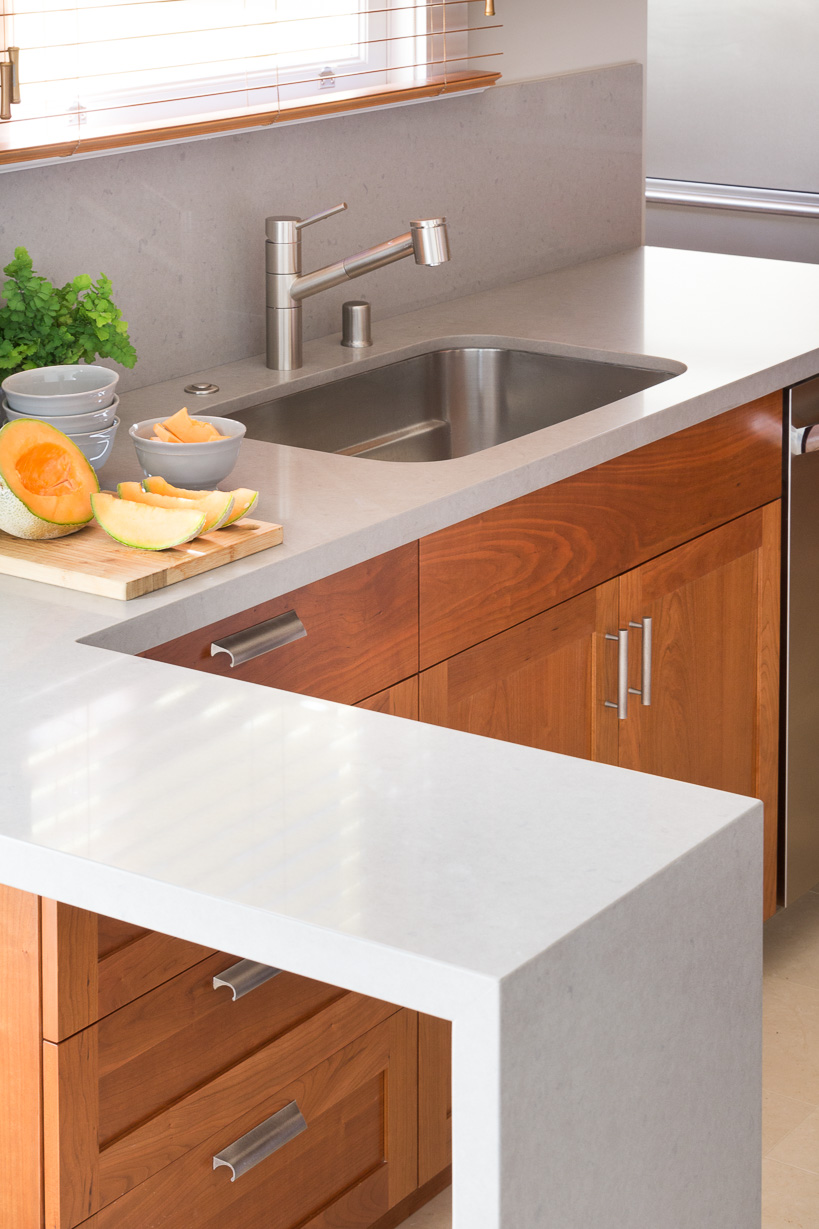
Design by Kimball Starr / Photo by David Duncan Livingston
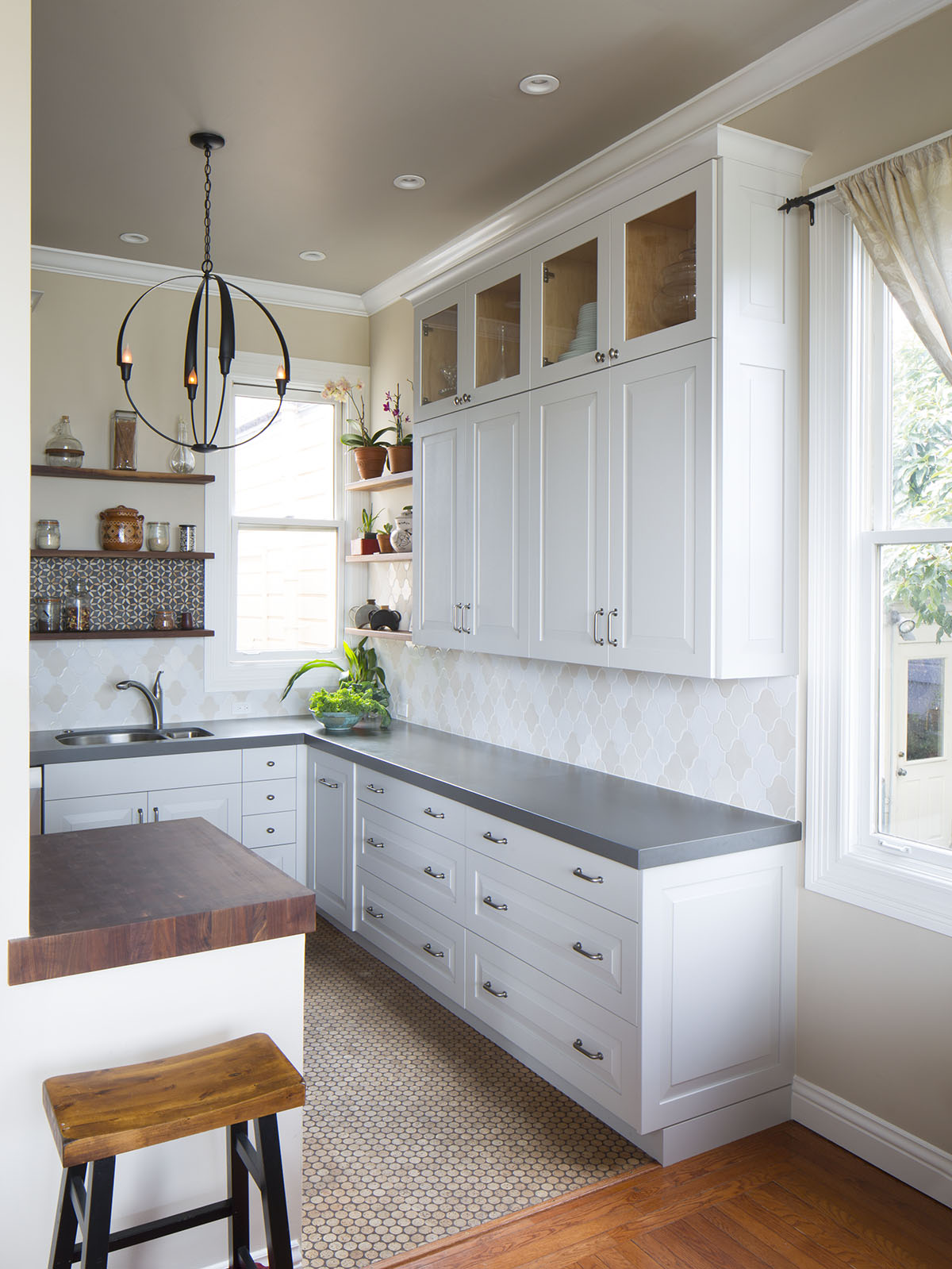
Have you heard of living in place? Also known as aging in place, it’s the concept that people want to remain in their homes as long as possible, as we age and our health and lifestyle needs change. For example, in the kitchen above, a simple faucet with a pull-out nozzle will make washing up easy for people with arthritis, and a walker or wheelchair could fit underneath the countertop end. Here are a few more tips for setting up your forever home.
Photo courtesy Rachel Shingleton of Pencil Shavings Studio
Choose Gorgeous, Right-size Furniture
A couple where the husband is 5’10” and the wife is 5’ may have some challenges in making their home comfortable for them both, without health issues in the mix. Even if you aren’t so different in size, it’s important to have furniture that’s the right scale and fit for you. Adjustable tables and chairs can be a help in this, as can designing a bathroom or kitchen with multiple counter heights.
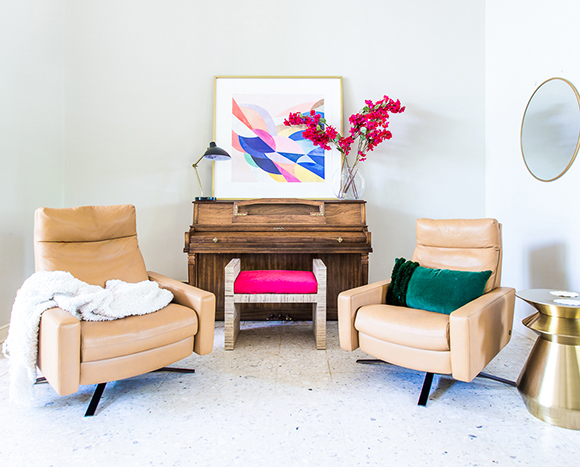
Also, specifying or customizing furniture to fit is a great solution. We found a smaller-scale recliner for an 85 y.o. grandmother who is only 5’. She had been struggling with a full-size recliner for years. Now she loves reading and relaxing in her right-size chair!
Photo courtesy Ljupco at Dreamstime.com
Create Accessible Flows
If you or your family member need to use a cane, walker, wheelchair or other ambulatory aid, it’s especially important to open up the circulation of your rooms. Ensure there’s at least a 3 to 3.5-foot pathway leading to doors and around furniture. Remove any trip hazards like loose rugs, and try to find rugs that have a low profile and rubber backing for places you still need them. Eliminate stairs and add ramps, or choose a one-level home, if you decide to relocate.
Photo courtesy Houzz.com
Bring It Down to Your Level
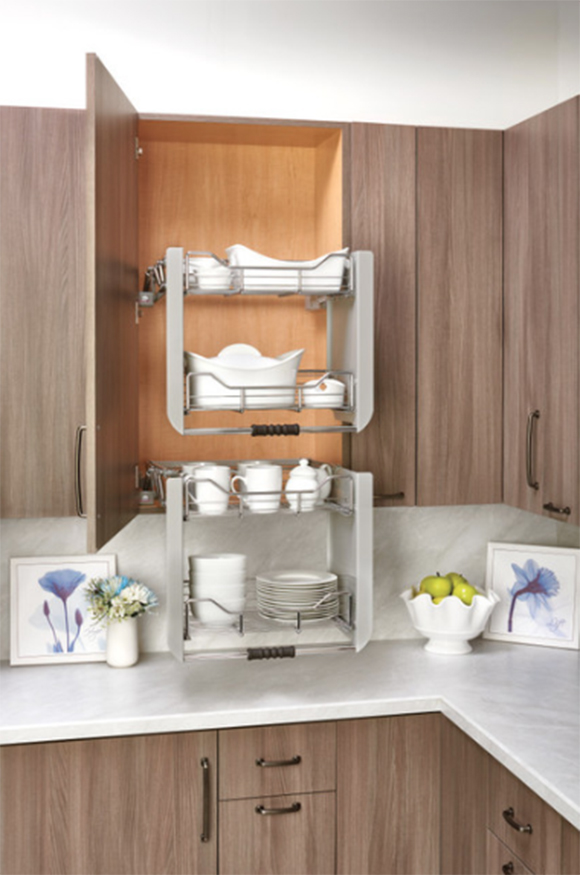
Think about how difficult it can be to get something down from a high shelf, especially if it’s heavy or bulky. Now imagine doing that while having bursitis, arthritis, or any number of painful conditions. Consider relocating heavy items to lower shelves, or installing a special pull-down shelf like the one above, allowing easy, safe access to upper shelves.
Design by Kimball Starr / Photo by Eric Rorer
Brighten Spaces with Lighting
As we grow older, our eyes change, and we
need more light to see well. I recommend installing recessed lighting that’s
centered over your task areas throughout your spaces for a bright, evenly lit
tone. Next, add table lamps for adjustable accent and task lighting.
One place you really need to see well is the kitchen. Recessed lights create a great foundation; then add under-cabinet lighting to illuminate your countertop workspace, making prep and cooking a delight. For soft, ambient light when task lights aren’t in use, finish off with a stylish pendant light or chandelier.
Design by Kimball Starr / Photo by Eric Rorer
Beautify Bathroom Safety
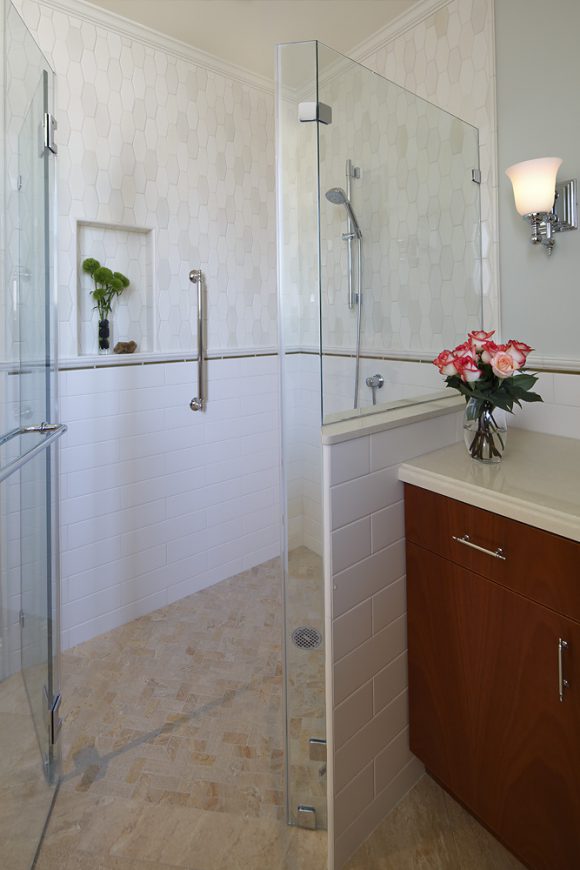
Grab bars don’t have to be clinical-looking. There are a wide range of ADA-approved grab bars that are both beautiful and safe. You can use them as additional towel rails to conceal their purpose.
Ideally, you want a curbless, step-in shower, like this one I designed for a couple in St. Francis Woods, San Francisco. Curbless showers are highly desirable even for those who don’t medically require them, creating a beautiful, flowing look for your bathroom. Selecting gorgeous, handmade ceramic tiles like the ones above will also elevate your space.
These are just a few ways to make your home a place you can remain for as long as you wish, with independence and freedom, into your golden years.
For more ideas on how to create YOUR forever home, contact Kimball Starr for a consultation today!
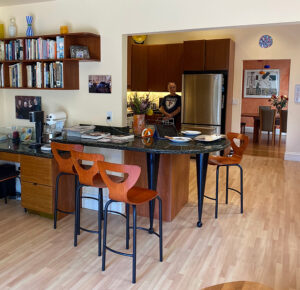
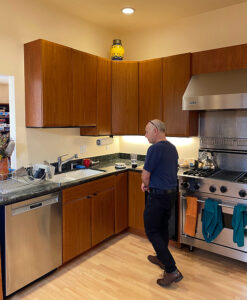
In January I shared photos of a recently-renovated kitchen belonging to my San Francisco clients. Now I’m here to share the glowing review they left me, and show a few before-and-after photos. Enjoy the transformation!
BEFORE – Photo by Kimball StarrAFTER – Design by Kimball Starr / Photo by Gao’s Cabinets
The kitchen is so much more light, open, and functional now.
BEFORE – Photo by Kimball StarrAFTER – Design by Kimball Starr / Photo by Gao’s Cabinetry
We opened up the wall in front of the new prep sink, creating a more unified space.
BEFORE – Photo by Kimball StarrAFTER – Design by Kimball Starr / Photo by Goa’s Cabinetry
The view into the backyard is now a feature, with the kitchen and living areas feeling harmonious with each other and nature. Great result and happy client! Read for the review below or on Google.
Despite being a residential real estate broker with decades of experience, I knew my wife and I would need help redesigning the kitchen of our Noe Valley home, which had seen us through 25 years of hard use.
Our primary interest was in getting help on the interior design and layout aspects of our new kitchen, and here Kimball really excelled. She was meticulous in her measurements and had a great eye for the practical necessities of a busy kitchen (my wife and I both like to cook).
One small detail as an example: Making sure there’d be enough room between the open door of the dishwasher and the end of our peninsula countertop to allow easy access.
She also helped us think through the specific uses of our custom cabinets and drawers so that we’d know we had room for all of our “stuff.”
Though our primary focus was on help with layout, Kimball also helped us select finishes. My wife’s and my design aesthetics are often not the same, and Kimball was very careful to be respectful of both of us. In fact, at a certain point we asked her to be more assertive of her own opinions and she responded accordingly.
As others have said, Kimball is not interested in pushing her own views; rather, she listens to what you want and helps to execute it. We really appreciated that.
The proof of the pudding is that we absolutely love our new kitchen! It “works” in all the ways we wanted it to. Besides this, Kimball was available, organized, always pleasant, easy to deal with, and very affordable. Easy 5 stars!
~ Google Review from user Misha W.
Kimball Starr designs contemporary homes throughout the San Francisco Bay Area and Lake Tahoe. Contact her today for a remote or in-person consultation.